





What a silk twill scarf asks of the maker
There is a moment in the making of a classic silk scarf when the craftsperson could stop.
The machine finish is clean. It is precise. It holds. To most eyes — and on most days — it would be enough.
But the hand-rolled edge asks for something more. It asks for time. For a slower movement across the fabric. For a decision, repeated stitch by stitch, that this particular edge is worth the extra hour.
That decision interests me more than the hem itself.
What a decade in architecture taught me about detail
I spent over a decade in interior architecture before I came to silk. And one of the things that discipline teaches you — quietly, over time — is that the details no one notices are often the ones that hold everything together.
Not because they are visible. Because they were chosen.
There is a difference between a space that was finished and a space that was considered. You feel it the moment you walk in, even if you cannot name it. Something is settled. Something was attended to.
The same is true of fabric.

The trace of human attention
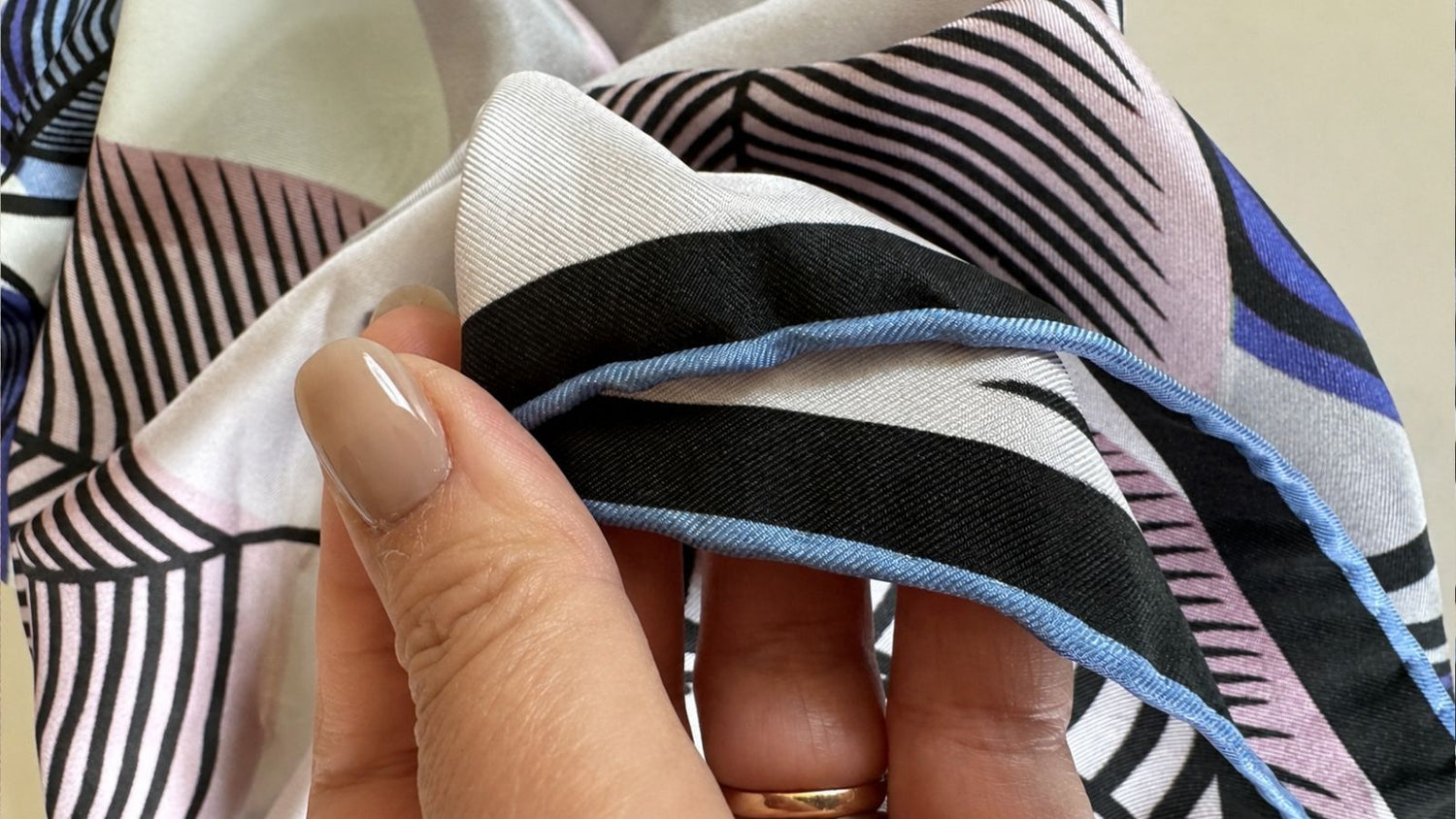
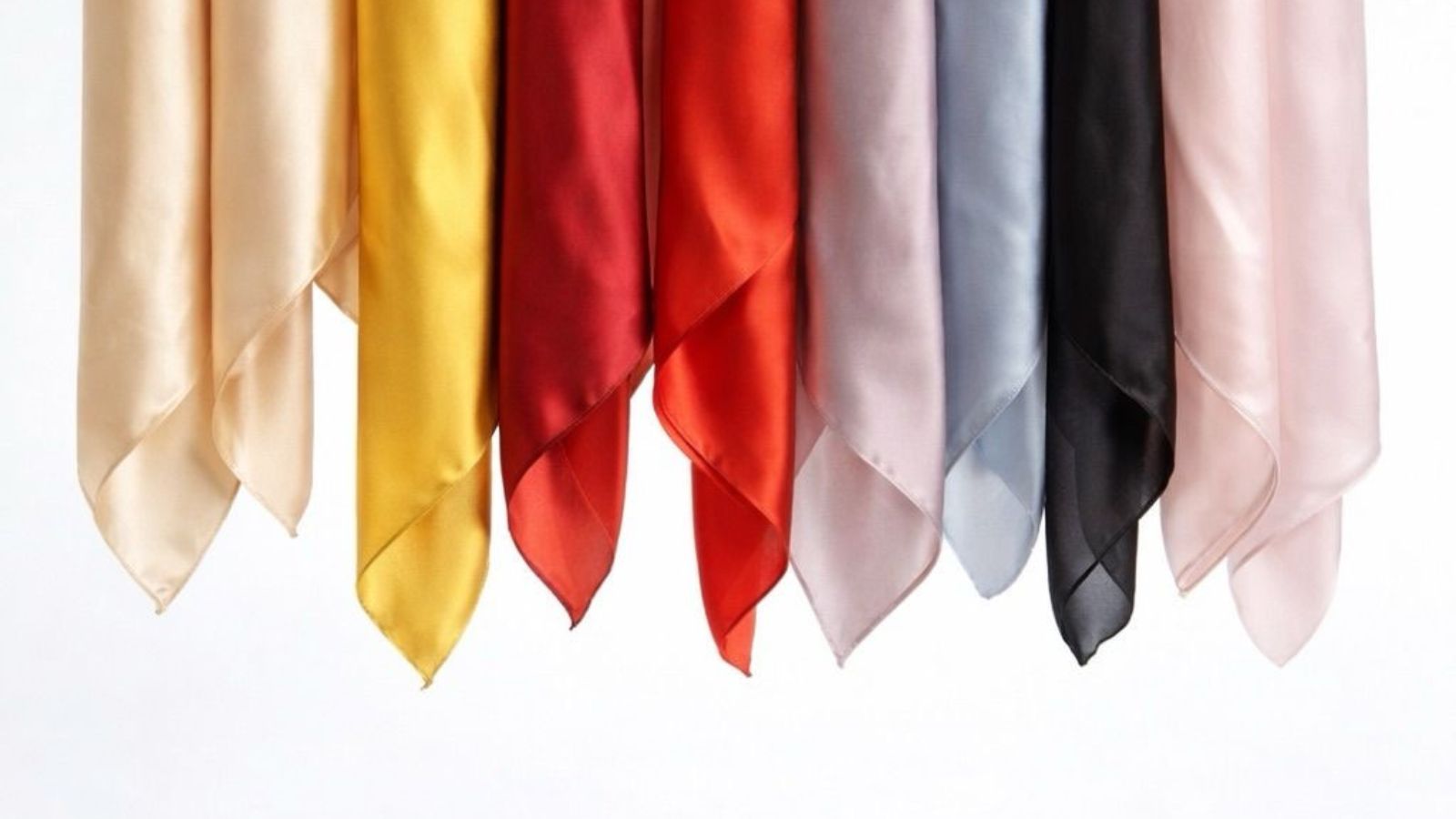
When I first held our silk twill scarf with a hand-rolled edge, I did not quite know how to process it. I just held it. The border had a softness to it — a slight dimensional roll that a machine cannot replicate, because a machine does not make decisions. It executes instructions.
The hand does something different. It adjusts. It responds to the fabric's tension in real time. It leaves, if you look closely enough, the faintest trace of human attention.
That trace is not a flaw. It is the point.
When time spent in the making is part of what the thing is
We live in a moment that is extraordinarily good at producing things quickly. At scaling the adequate. At distributing the almost-right.
And so the choice to do something the slower way has become, quietly, a form of resistance.
Not nostalgia. Not romanticism. Something more deliberate than either of those.
It is the choice to say: this thing deserves more time than the instant version of it would allow. And I am willing to give it that time — not because anyone will notice, but because I will know.
Craft as a private standard
I think this is what craft actually means, when you strip away the aesthetic associations.
Craft is not a style. It is not linen and neutral tones and artisanal everything.
Craft is a standard applied in private. It is the decision made when no one is watching — when the easier path is available and the maker chooses the other one anyway.
That is the hem no one sees. That is the interior detail that exists behind the wall. That is the sentence rewritten one more time, not because the previous version was wrong, but because it was not yet right.
The things worth making take longer.
Not always. Not as a rule to be applied blindly.
But when something is meant to last — meant to be lived with, reached for, worn across years rather than seasons — then the time spent in the making is not a cost.
It is part of what the thing is.
Explore the collection and discover the pieces that are meant to be lived with, reached for, and worn across years.


اترك تعليقًا
تخضع جميع التعليقات للإشراف قبل نشرها.
This site is protected by hCaptcha and the hCaptcha Privacy Policy and Terms of Service apply.